One of the most common myths about Japan is that it’s incredibly pricey — but how expensive is Japan really?
The truth is, Japan may not be as expensive as you think. While prices for certain goods and services are generally higher than you’d find in countries like China, Thailand, and Vietnam, on the whole you might discover that costs are lower than places such as Singapore, Australia, and Scandinavia.
So where did this myth come from? Japan started to develop a reputation for being outrageously expensive during the bubble years of the 1980s, when prices were in fact exorbitant. But over the past few decades, thanks in part to Japan’s relative economic stagnation, it has gradually become a more reasonably priced destination.
So to help you plan for your visit — whether you’re looking for luxury, or on a less flexible budget — we’ve put together this guide on approximate prices to expect when traveling to Japan.
Originally written in 2014, this post was updated and republished on December 8th, 2025.
How Much Do Things Cost in Japan?
While it would be an exaggeration to call it a low-priced destination, one of the great things about Japan is that you can truly tailor your experience to your budget, meaning that how much you spend is, to a good degree, up to you.
If your budget is flexible, it’s very easy to spend money here. But even if you’re on a tighter budget, it’s completely possible to have a wonderful experience. For example, if you want to have the best sushi in Tokyo, it could cost you ¥40,000 per person or more — and it will probably be worth it! On the other hand, for just ¥500 or so, you can have a simple but delicious bowl of soba or udon noodles.
To give you a more concrete idea of how much things cost in Japan, below is a list of real-world examples to help you plan for your trip. Please keep in mind that prices can vary, and exchange rates are constantly fluctuating. All estimated prices below are listed in Japanese yen.
While our bespoke travel-planning service is not oriented towards budget travelers, if you’re on a budget check out our friends Tokyo Cheapo.

Food Prices in Japan
The quality of food in Japan is so high that it’s definitely worth splurging on at least one special meal, even if you’re not the type of traveler dazzled by Michelin stars. But you may also find that some of your favorite meals end up costing under ¥1,500. Here are some sample food prices to give you a sense of the cost of food in Japan:
- Onigiri (rice ball) at a conbini: ¥200
- Pastry at a bakery: ¥400
- Bowl of soba or udon noodles: ¥500
- Bowl of ramen: ¥1,200
- Teishoku (lunch set) with fish, miso soup, rice, tea, and pickled vegetables: ¥1,400
- Inexpensive sushi meal: ¥3,000
- Dinner and drinks at a good izakaya: ¥7,000
While high-end dining in Japan can be quite expensive, more than anything it comes down to what you eat. It’s certainly worth spending a bit extra for quality ingredients, but even affordable food in Japan is generally excellent.

Drink Prices in Japan
As with all of the figures quoted in this article, prices can vary depending on the city as well as the specific establishment. For example, it’s possible to spend much more on premium tea, or less on cheap wine, etc.
- Tea: Often provided for free with a meal
- Basic coffee: ¥300
- Specialty coffee: ¥600
- Draft beer at an izakaya: ¥700
- Glass of sake: ¥800
- Glass of wine: ¥1,000 or more
- Whisky: Varies dramatically
Transport Costs in Japan
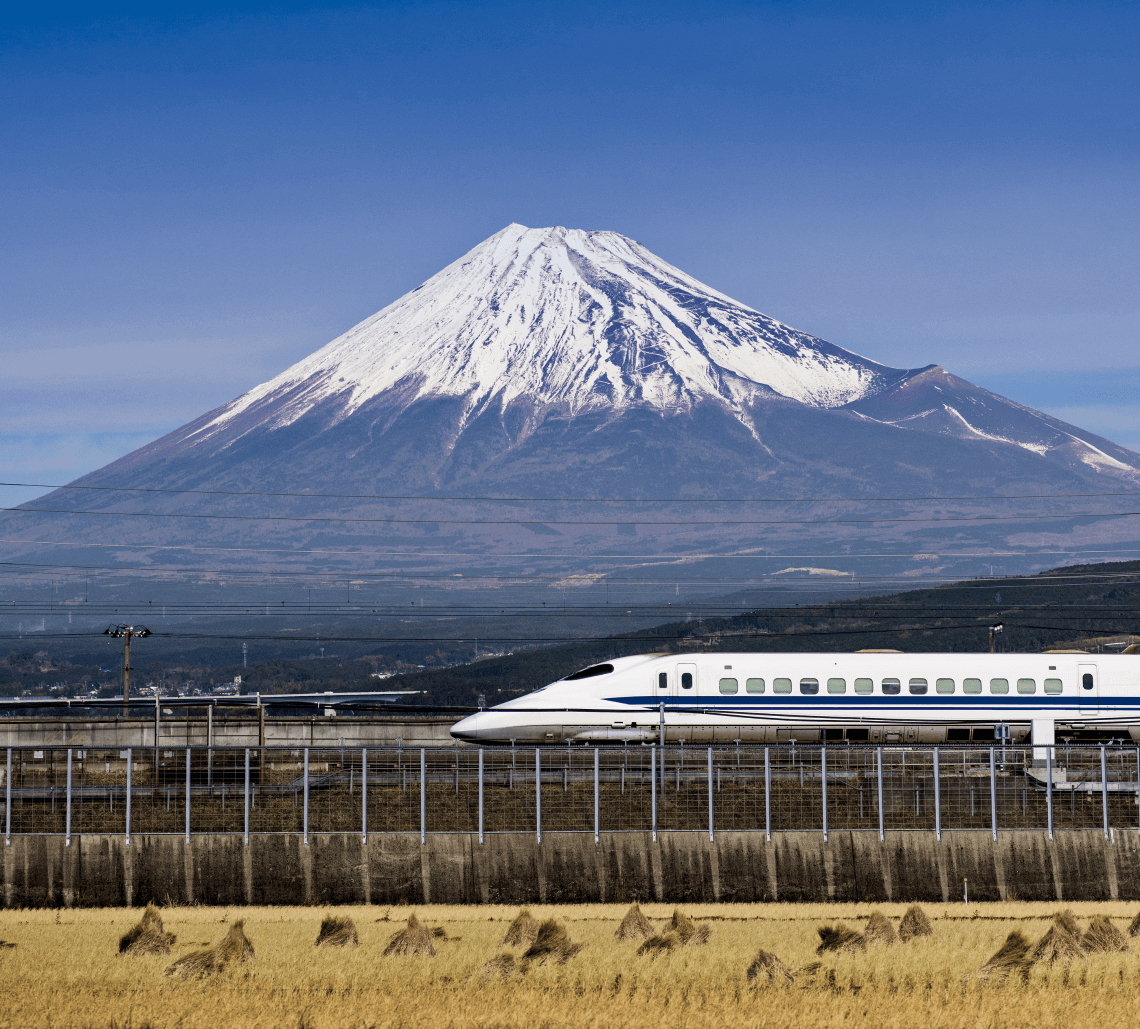
Getting around Japan is surprisingly easy, and its transport systems are clean, extremely efficient, and generally reasonable in cost.
- Local train or subway ride in Tokyo: ¥300
- Bus ride in Kyoto: ¥230
- Taxi fare in central Tokyo: ¥3,000
- Taxi fare in central Kyoto: ¥2,000
- Bike or e-bike rental: ¥1,500 per day
- Standard class shinkansen (bullet train) trip one-way from Tokyo to Kyoto: ¥14,000 (find out if the Japan Rail Pass is worth it for you)
- First class (Green Car) shinkansen trip one-way from Tokyo to Kyoto: ¥19,000
Entrance Fees and Tickets
With some exceptions, many travelers find Japan to be surprisingly reasonable when it comes to entrance fees. For example, many temples and shrines are completely free, while those that aren’t usually have a nominal fee.
- Matsuri (festivals): Free
- Kenrokuen garden in Kanazawa: ¥320
- Temples and shrines in Kyoto: Often free or around ¥400
- Art museum entrance fees: ¥1,000-¥2,000
- Ghibli Museum tickets: ¥1,000
- Sumo basho tickets: ¥10,000 per seat or ¥45,000 per box

Hotel and Ryokan Prices in Japan
Hotel and ryokan (traditional inn) prices can vary dramatically depending on the level of luxury, along with seasonality. For example, peak seasons like the cherry blossom season are particularly expensive. Nowadays, most hotels have dynamic pricing, which fluctuates based on factors including real-time inventory, day of the week, and more.
- Budget hotel: ¥10,000 per night
- Mid-range hotel: ¥30,000 per night
- Boutique hotel: ¥50,000 per night
- Luxury hotel: ¥100,000 per night
- Luxury ryokan: ¥50,000-100,000 per person per night
Because hotel and ryokan rates can change so much from day to day and season to season, the prices listed above are approximations, at best. Learn more about the country’s most unique properties in Japan’s Best Boutique and Luxury Hotels & Ryokans and Best Luxury Ryokans for a Short Japan Trip.

Tipping in Japan
When planning your trip, it’s also worth remembering that Japan does not have much of a tipping culture. Japanese hospitality is world-renowned, but despite how good the service is, tipping is usually neither required nor expected.
In recent years, tipping in Japan has become more common in certain situations. For private guides, showing appreciation by offering a gratuity after a day of touring would not be considered inappropriate, though still entirely optional. Tipping is also acceptable for long-distance drivers and ryokan attendants, but it remains unnecessary to tip at restaurants, bars, cafes, and for your taxi rides.
See our full article on tipping in Japan for more guidance.
Prices in Japan
Hopefully this gives you a better idea of how much things cost in Japan, and shows you it’s not as expensive as you may have thought. Of course, if you are looking to splurge, with its incredible accommodations, cuisine, and shopping, Japan is the place to do so!
No matter your budget, you’ll find that Japan’s wonderful hospitality and many memorable experiences are never hard to come by.